Household guidance
Standby UK — Guidance
Simple steps to prepare your home
Official UK guidance recommends every household has a plan and a basic emergency kit. Here’s how to get started.
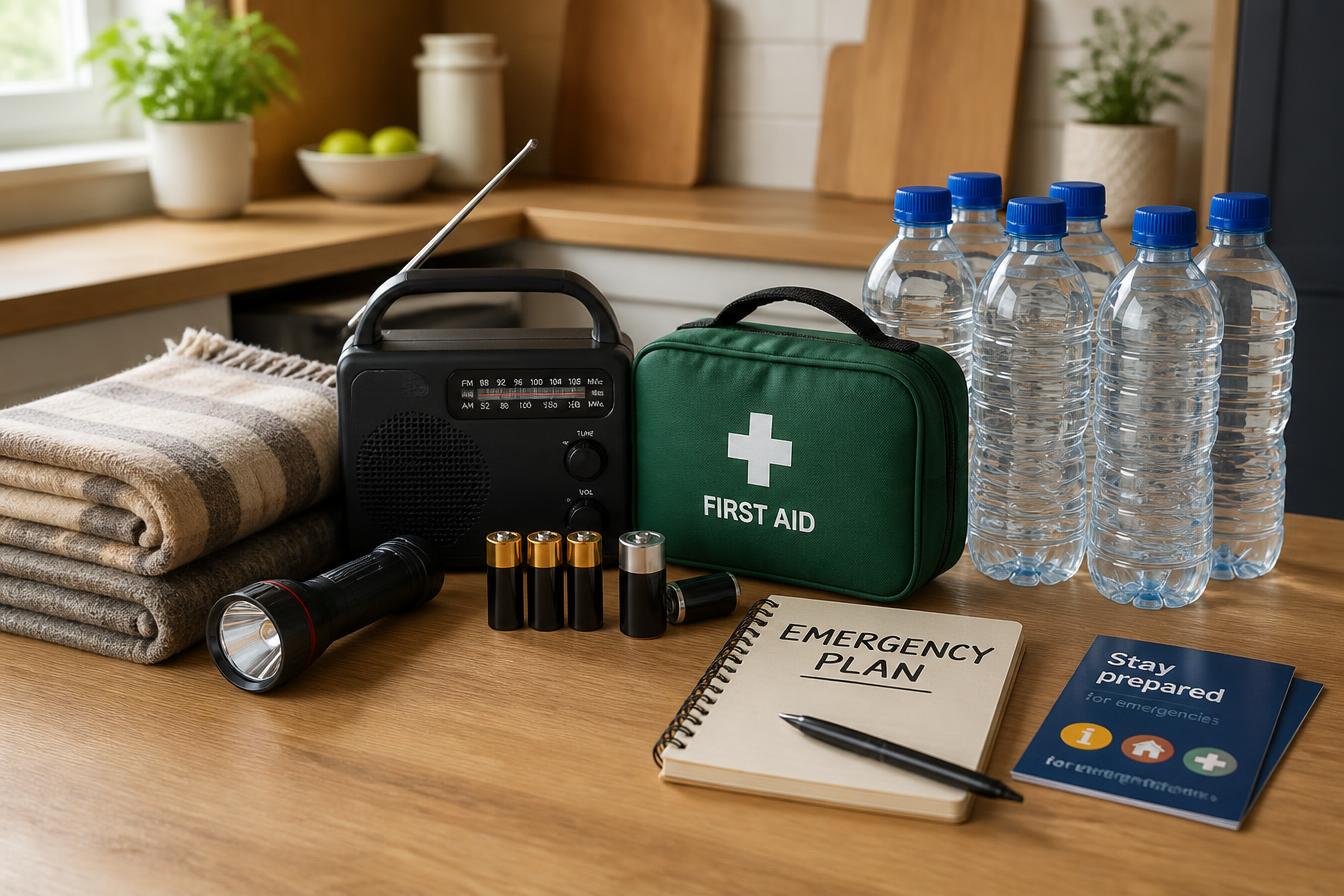
Build a basic kit
Store these items somewhere easy to find. Check expiry dates and replace batteries twice a year.
Water
At least three litres per person per day for three days.
Food
Tinned and dried foods that don’t need cooking or refrigeration.
Torch & batteries
A battery-powered torch and spare batteries for power cuts.
Battery radio
To receive emergency broadcasts if mobile networks are down.
Important contacts
Written numbers for family, neighbours, utilities, and GP.
Warmth
Blankets, warm clothing, and any essential medication.
Make a household plan
Talking through a few simple questions now can save stress later. Make sure everyone in your home knows the basics.
- Know how to turn off gas, electricity, and water.
- Agree a meeting point if your household is separated.
- Keep important documents safe and accessible.
- Check on elderly or vulnerable neighbours.
- Follow official warnings and local emergency services advice.
The 72-hour fridge checklist
Enter your email to view and receive the one-page fridge checklist.
Stay informed with official sources
In an emergency, follow guidance from local emergency services, your local council, and official UK government channels.
Standby UK is an independent resource. For the latest official advice, visit gov.uk/prepare.